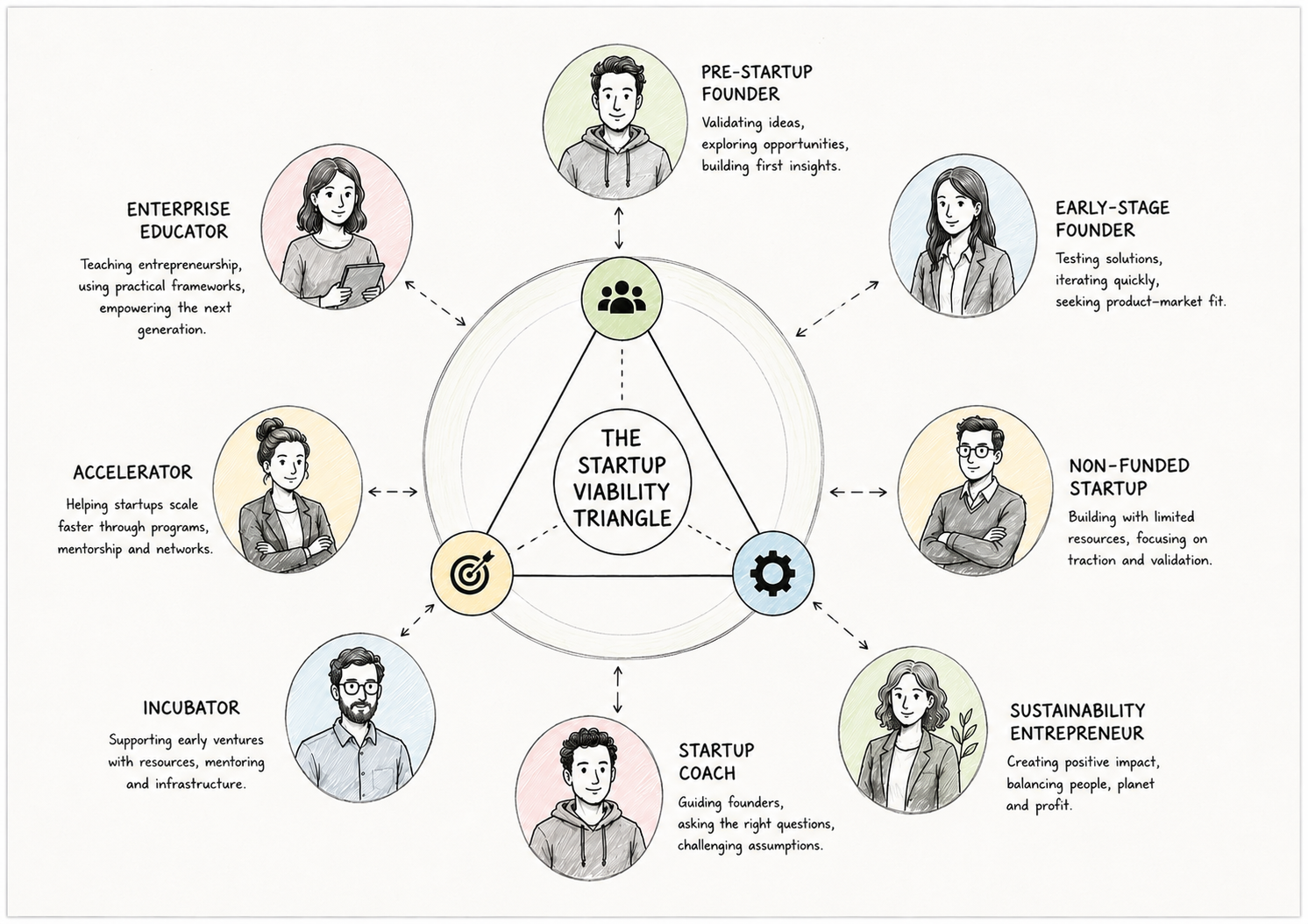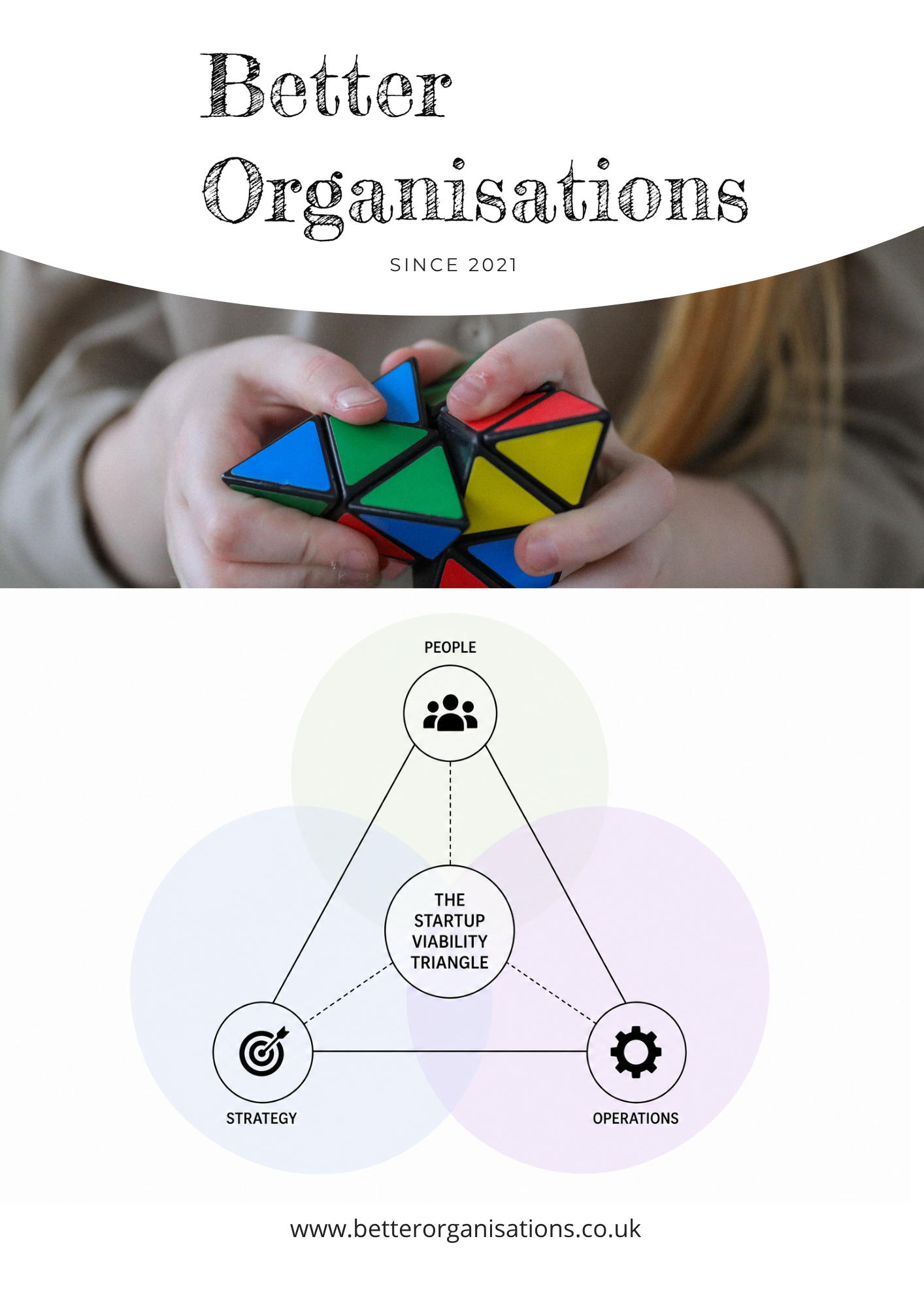
The Startup Viability Triangle
THE CHALLENGE
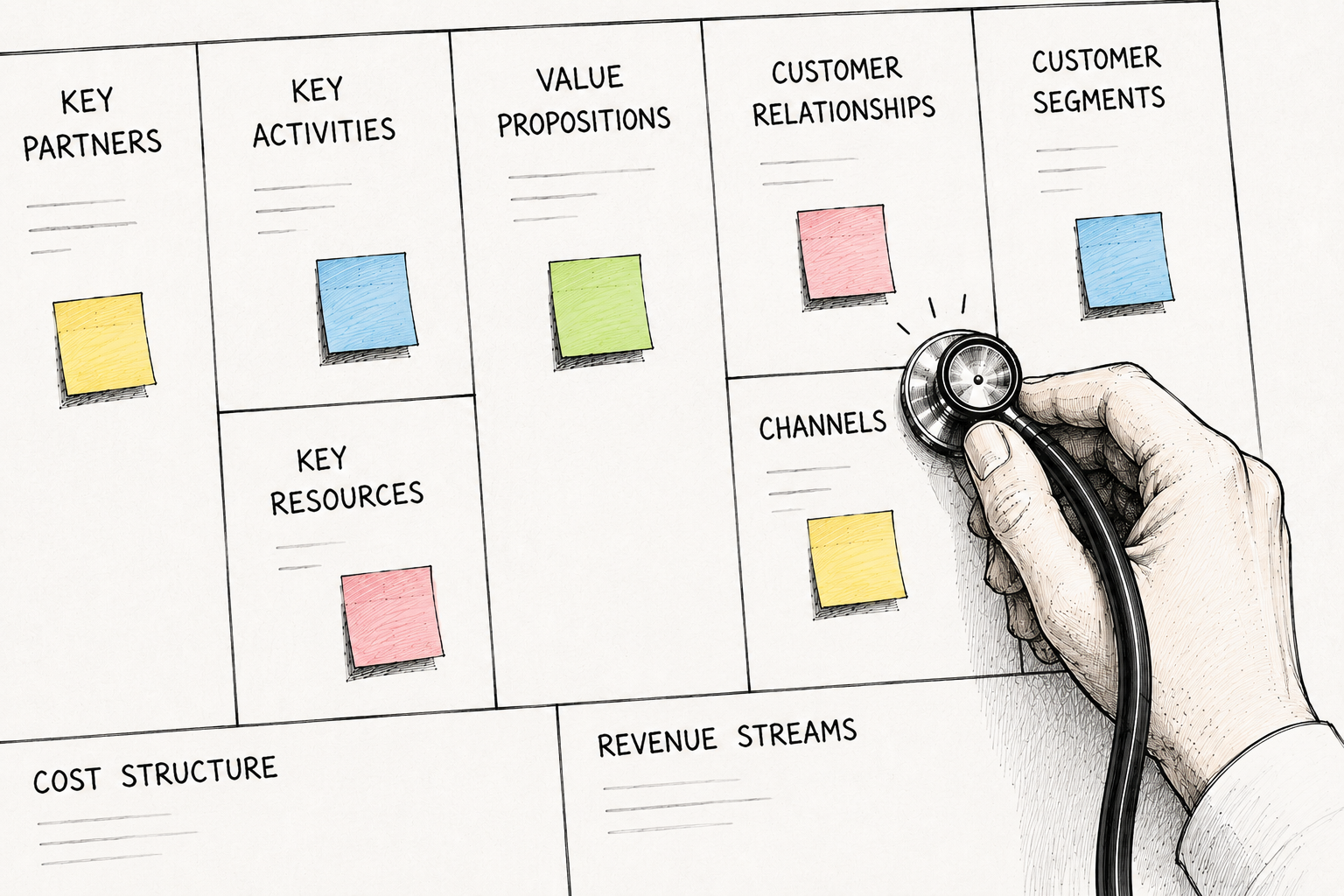
Most startup tools help you describe the idea. This one help you diagnose the venture
Many founders can explain their product, market or business model. Fewer can clearly show what is evidenced, what is assumed and what is likely to break next.
A startup can fail because customers do not pay, but it can also fail because founders are misaligned, the culture is incoherent, delivery depends on heroic effort, or growth exceeds the operating system.
THE FRAMEWORK
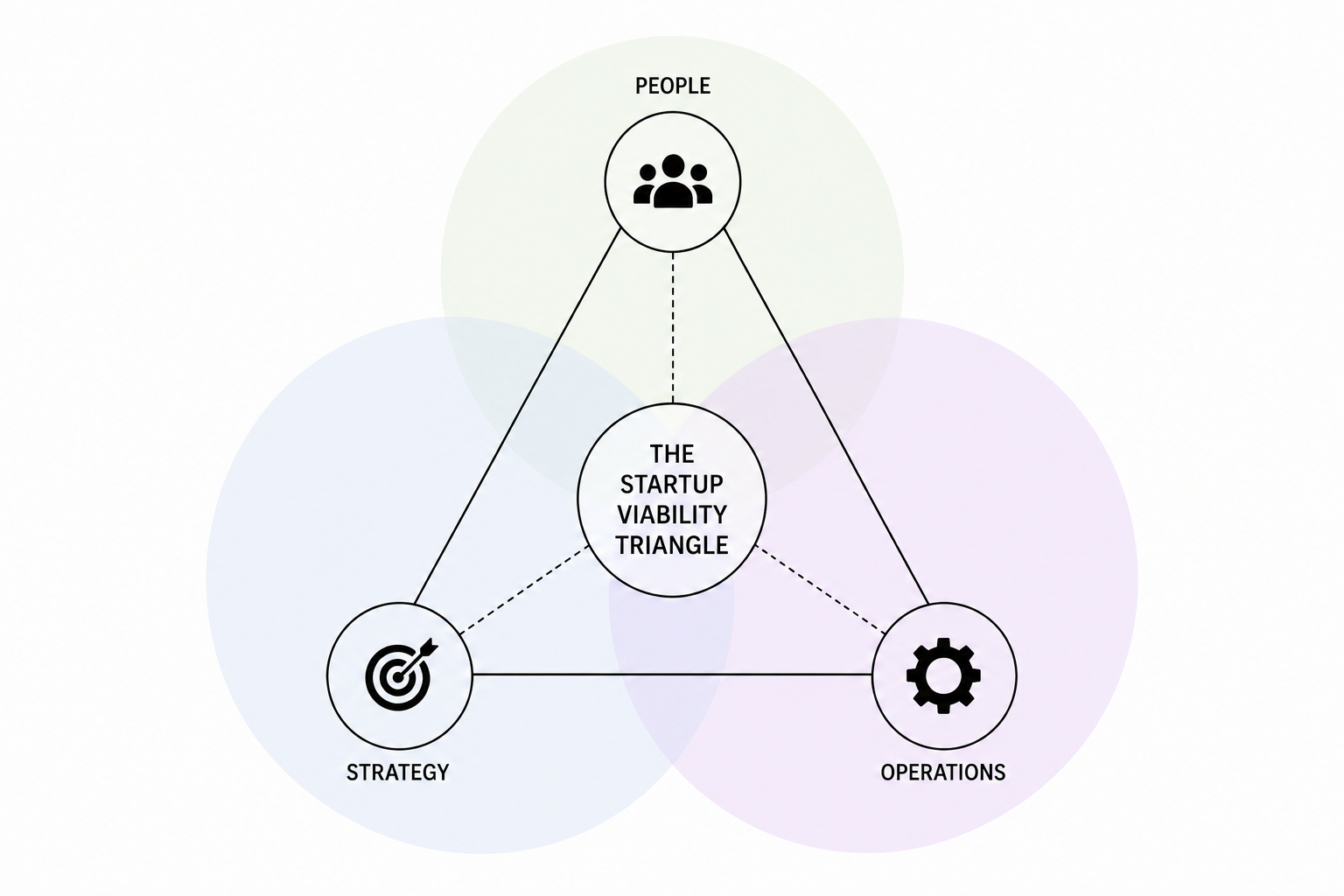
Three dimensions decide venture viability
Strategy
Do we have a real business opportunity, or only a promising idea?
This part tests whether the venture is grounded in customer reality: a clearly defined target group, a meaningful problem, evidence that people will pay, a viable business model, and a sensible path to growth
Strategy asks: Is this a real opportunity?
People
Do we have the human foundations needed to build this venture?
This part looks at the founder, team and wider stakeholder system: motivation, values, cultural coherence, decision-making, focus, learning capacity, conflict, resilience and whether the people involved are aligned with the business being built.
People asks: Are we the right human system to pursue it?
Operations
Can we turn the idea into reliable delivery?
This part examines the operating system of the venture: how work gets done, how value is delivered, how decisions are made, what is measured, where capacity limits exist, and whether the business can grow without breaking.
Operations asks: Can we deliver and scale it reliably?
What will you get?
- Step-by-step explanation of the Startup Viability Triangle.
- Evidence maturity scale from 0 to 5.
- 10 Strategy questions.
- 10 People questions.
- 10 Operations questions.
- Readiness interpretation guide.
- Six diagnostic profiles.
- Clarity.